
By Ferdinand Olise
ActionAid Nigeria has welcomed President Bola Tinubu’s 66th Independence Day declaration of backing the promise to defeat poverty with clear, measurable targets.
In his Independence Day address, President Tinubu declared: “Our objective is not to manage poverty more efficiently. We will defeat it.”
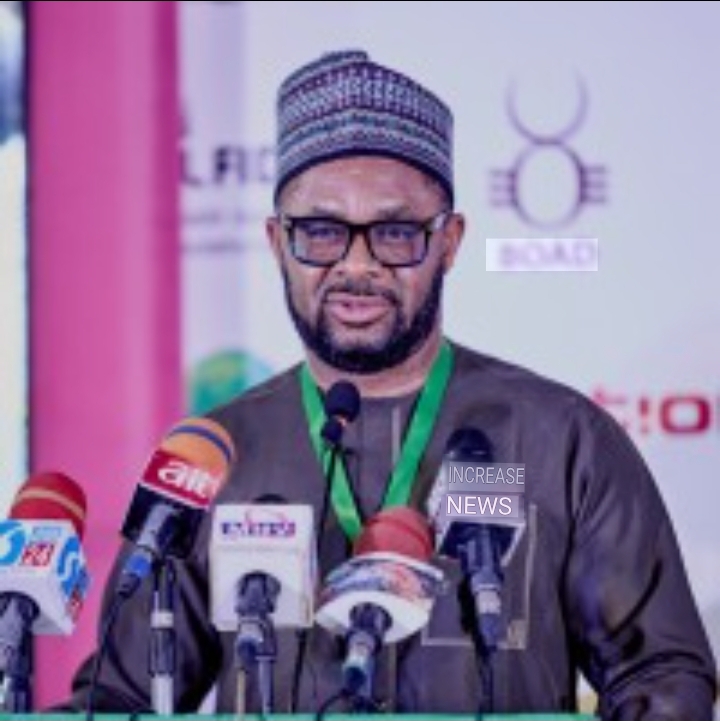
ActionAid, in a statement signed by its Country Director, Dr Andrew Mamedu, described the commitment as bold, but said Nigerians need to know how success will be measured.
“The President has made a bold commitment that Nigeria will defeat poverty. Nigerians should now be able to hold the government to that commitment through clear, measurable results,” Dr Mamedu said.
The organization cited World Bank data showing that an estimated 50.8 percent of Nigerians, about 123 million people, lived in extreme poverty in 2025, while 69.6 percent lived below the $4.20-a-day poverty line for lower-middle-income countries.
Action Aid therefore stated that government should be able to tell Nigerians, year by year, how many people have moved out of poverty.
“Poverty cannot be declared defeated because economic indicators are improving. It will be defeated when people can feel the difference at home,” the statement noted.
ActionAid acknowledged positive macroeconomic signals, including NBS data showing real GDP grew by 4.43 percent year-on-year in Q2 2026, up from 3.89 percent in Q1, and headline inflation moderating to 15.39 percent in August 2026, though food inflation remained high at 19.57 percent.
The organisation urged that growth must be inclusive.
“GDP can grow while families remain poor. Nigeria must ensure that economic growth translates into shared prosperity,” the group said, noting that the World Bank itself observed that household incomes have not fully recovered.
The group also referenced the President’s vision of a Nigeria where “the farmer can cultivate his land safely, produce more at lower cost, and earn a decent return for his labour,” saying this should become a measurable commitment.
According to FAO’s latest assessment, nearly 36.3 million people faced severe acute food insecurity during the June-August 2026 lean season, including about 2.1 million at emergency levels, driven by conflict and economic pressures.
ActionAid therefore called for investments in irrigation, mechanisation, seeds, storage and transport to deliberately reach small holder farmers, particularly women, and for stronger support for climate-resilient and agro-ecological practices.
The organization further stated that insecurity must be measured beyond military operations.
“Security has to be measured not only by operations conducted or criminals neutralised, but by outcomes: Are attacks declining? Are farmers returning safely to their fields? Can displaced families return home? Are children attending school without fear?” the statement said.
ActionAid urged the Federal Government to translate the Independence Day commitments into time-bound, publicly measurable targets for poverty reduction, household incomes, food security, employment, social protection and community safety.
“If this is truly the beginning of an age of prosperity, then prosperity must have numbers, targets and timelines. We must be able to measure how many Nigerians are leaving poverty behind, not simply how much the economy is growing,” Dr Mamedu added.